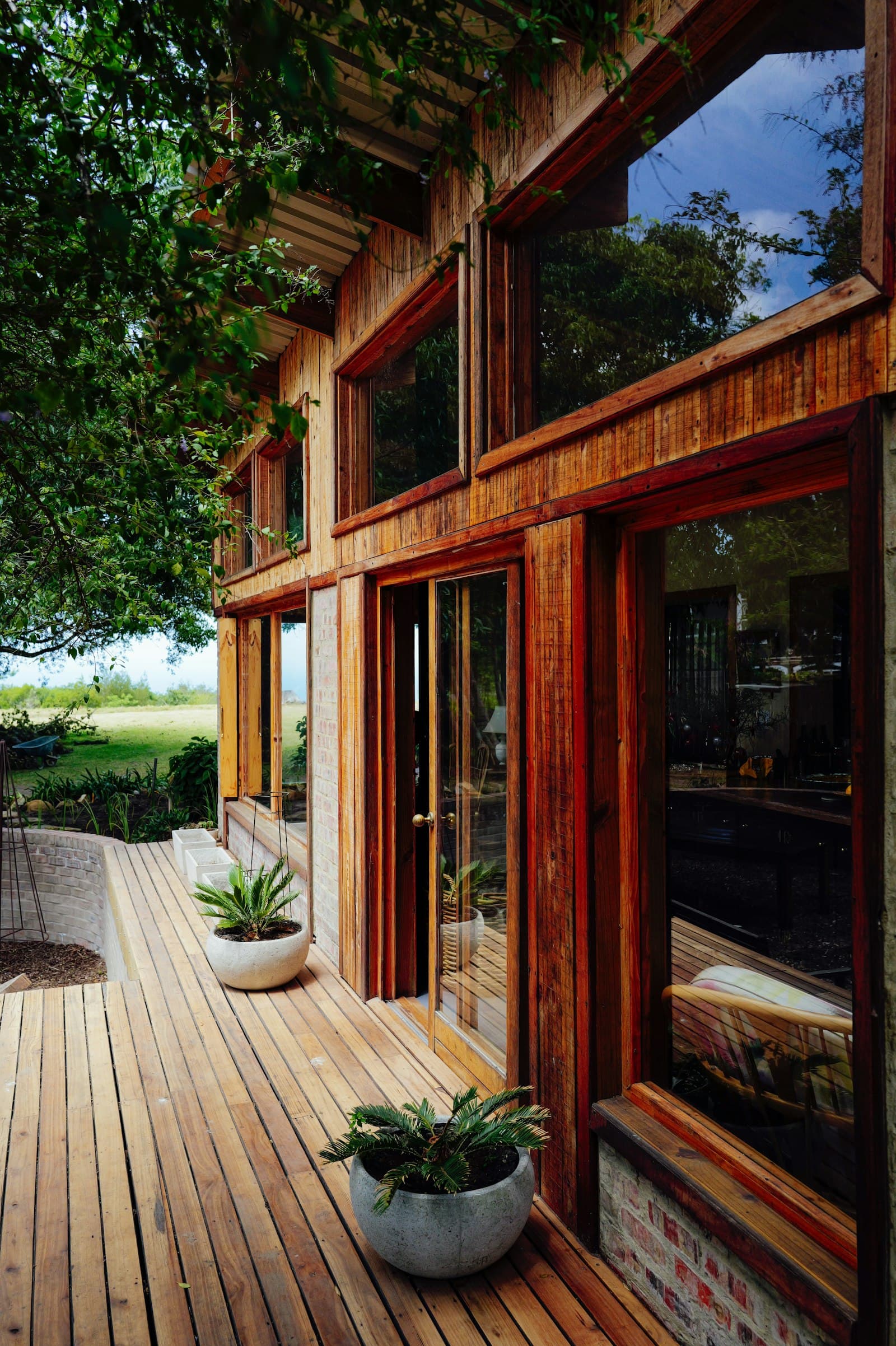
Roughly two thirds of new GTA deck quotes I see in 2026 are for capped composite, and almost all of them come from one of three brands: Trex, TimberTech, or Fiberon. Most homeowners I’ve talked to don’t actually choose the brand — their contractor recommends one because it’s what their distributor stocks, and the conversation ends there.
That’s fine when the contractor genuinely knows what they like and why. It’s not fine when the recommendation is really “whatever’s in the truck.” This post walks through what the three big composite brands actually differ on, what to watch for in southern Ontario’s climate specifically, and how the price-to-value math lands in 2026.
What “capped composite” actually means
All three of the brands below sell capped composite boards: a wood-flour-and-plastic core wrapped in a hard polymer shell. The cap does most of the work — UV resistance, stain resistance, scratch resistance. Uncapped composite still exists (Trex’s original Accents line, for example) but has effectively been end-of-lifed for new GTA builds because the staining and fading problems were real.
Within capped composite, each manufacturer ladders three tiers: entry-grade single-cap boards, mid-grade boards with a fuller cap and better colour realism, and premium boards with full four-side capping and the best warranty. Pricing roughly tracks tier.
Trex
The largest composite manufacturer in North America and the brand most GTA homeowners have heard of. Distribution is excellent province-wide — Home Depot, Lowe’s, RONA, and specialty lumber yards all carry it, which means restock and replacement boards are easy to source.
Lines you’ll be quoted in 2026
- Trex Enhance Basics / Naturals: entry tier. Single-cap, three-sided. 25-year warranty. Limited colour palette. Cost-effective but the surface texture is the most plastic-looking of any line in this comparison.
- Trex Select: mid-tier. Better colour depth, slightly improved cap formulation, 25-year warranty.
- Trex Transcend / Trex Signature: premium tier. Four-sided cap, the most realistic wood-grain pattern Trex makes, 50-year fade and stain warranty.
What to watch for in southern Ontario
Trex’s expansion-and-contraction characteristics are slightly higher than the other two brands. On a long run (20′+), this translates into wider gap requirements at board ends. Contractors familiar with the brand know to leave the gap; new-to-Trex builders sometimes don’t, and you see board ends butt up tight after the first cold snap. Specify the manufacturer’s recommended gap in writing.
TimberTech (AZEK)
TimberTech is the composite line owned by The AZEK Company. AZEK itself makes a 100% PVC line that’s a separate category (closer to PVC than composite); for most homeowners the question is TimberTech vs. Trex vs. Fiberon, and TimberTech is the option that most contractors will tell you costs “a bit more but feels better underfoot.” They’re right.
Lines you’ll be quoted in 2026
- TimberTech Edge Prime / Prime+: entry tier. Single-cap composite, 25- and 30-year warranties.
- TimberTech Reserve: mid-tier. Four-sided capped composite with a noticeably better surface texture than equivalents in the Trex or Fiberon mid-tier.
- TimberTech Legacy: premium tier. Four-sided capped composite, the most realistic-looking line in the composite category. 50-year warranty.
- TimberTech AZEK (Vintage / Harvest / Arbor): PVC. Lighter than composite, cooler in direct sun, longer warranty again. The price step from Legacy to AZEK is meaningful.
What to watch for in southern Ontario
TimberTech’s cap formulation handles freeze-thaw cycling slightly better than Trex in my experience — specifically, I’ve seen fewer surface micro-cracking complaints in years five through ten on TimberTech installs than on equivalent-tier Trex installs. Not a huge difference but worth knowing if you plan to stay in the house longer.
The downside: distribution is thinner. You’ll have to plan ahead for replacement boards if you damage one, especially in less-common colours.
Fiberon
The smallest of the three, but the brand that punches well above its weight on price-to-value at the mid-tier. Distribution in the GTA is good (most major lumber yards stock it) and lead times for standard colours are short.
Lines you’ll be quoted in 2026
- Fiberon Good Life: entry tier. Single-cap, basic colour palette, 25-year warranty.
- Fiberon Sanctuary: mid-tier. Four-sided cap, improved colour depth. In my opinion the best dollar-for-dollar board in the mid-tier across all three brands.
- Fiberon Concordia: premium tier. Four-sided cap, most realistic Fiberon grain, 50-year warranty.
What to watch for in southern Ontario
Fiberon’s cap is harder than Trex’s in lab tests, which translates into better scratch resistance for households with dogs or kids dragging chairs. The tradeoff is that it’s slightly more slippery when wet than the other two — if your deck sits in shade or near a pool, factor in either grooved boards or a textured colour.
Side-by-side: which one to pick
If your budget is tight and you’re prioritizing first cost:
Fiberon Sanctuaryis the best value mid-tier in 2026. Tier-for-tier it’s typically $2–$5/sq ft cheaper than equivalent Trex or TimberTech, and the board quality is genuinely competitive.
If you want the best-looking board for a primary deck:
TimberTech Legacyin one of the cathedral-grain colours (Tigerwood, Whitewash Cedar) is the line that consistently gets people walking onto a deck and asking if it’s real wood. Premium pricing but worth it if the deck is the focal point of outdoor entertaining.
If you want the safest, most-supported, easiest-to-source choice:
Trex Transcend. The widest distribution, the most contractor familiarity, and warranty service Trex actually honours. You pay a small premium for ubiquity.
If you have a pool or shaded deck where moisture is a constant:
TimberTech AZEK (PVC).Not a composite anymore, but worth mentioning — PVC handles persistent moisture better than any composite, and the surface stays cooler in direct sun. The price jump is real (typically +$15–$25/sq ft over Legacy) but for pool-deck applications it’s the right answer.
Three questions to ask your contractor before signing
- Which specific line and colour are you quoting? “Composite” is not a spec. “Trex Enhance Naturals in Toasted Sand” is.
- What’s the joist spacing for this board? Most capped composite needs 12″ on-centre, not the 16″ that’s standard for PT decking. Wrong spacing will void the warranty.
- Are hidden fasteners or face screws included? Hidden fasteners ($150–$280 extra on a 224 sq ft deck) give you a cleaner finish but slower repairs. Specify which you’re paying for.
Toggle between Trex, TimberTech, and Fiberon in the calculator to see how the per-square-foot delta plays out for your specific deck size. The cedar-vs-composite breakdown is also worth reading if you’re still deciding between materials, not just brands.